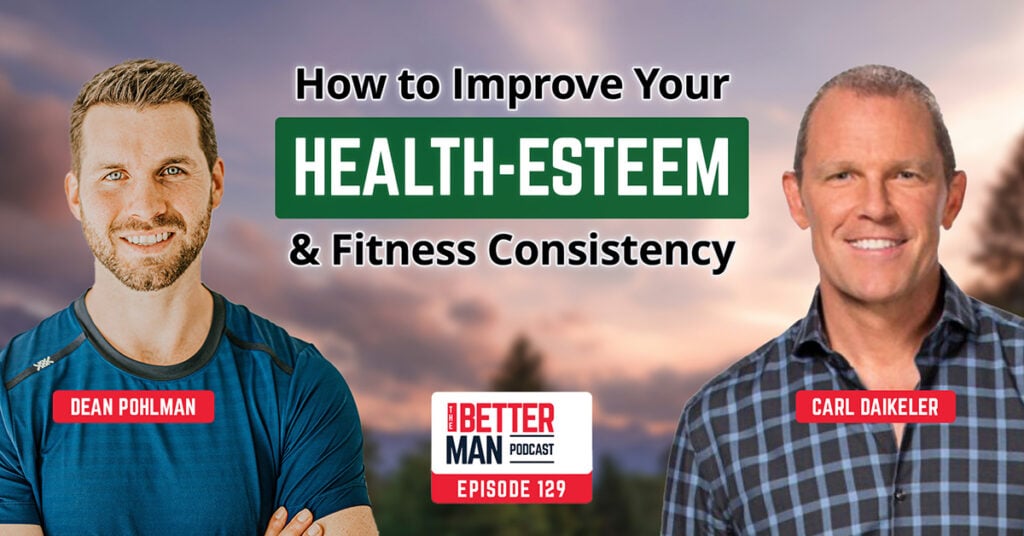
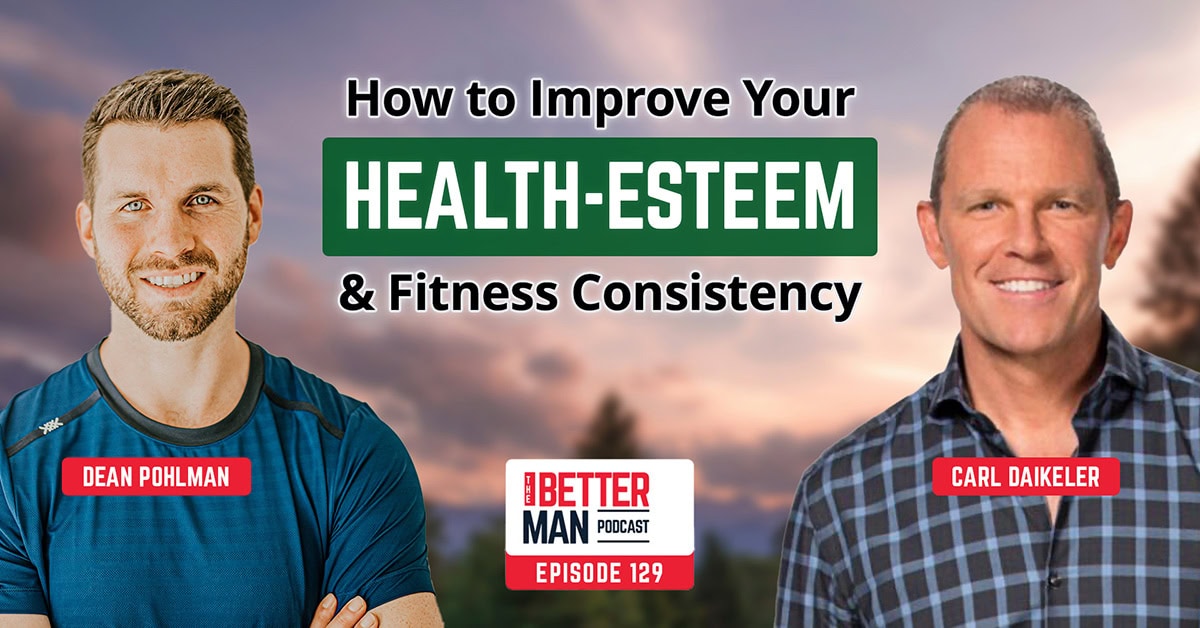
Dean Pohlman: Hey, guys. It’s. Welcome to the betterment podcast. Today is the first episode of what I’m calling season six. So in this episode, I’m going to be interviewing Carl Dikwa. He is the co-founder of. Body, formerly known as Beach Body, which is the creator of P90x and Sandy and a whole bunch of other very popular workout programs. So in this conversation, we’re going to go through a lot of the struggles of what it takes people to be consistent and to just do their workouts and live a healthier lifestyle.
Dean Pohlman: So we share our own opinions and kind of discuss what holds people back and what are the frustrations, and what are the challenges that people face in those things. This is also a new podcast episode format. So in the press, a lot of these episodes have been like, you know, 60 or 75, some of them even 90 minutes.
Dean Pohlman: I’m trying to make those shorter. So this episode is only about 45 minutes, which hopefully you’ll appreciate the shorter format and then, hopefully bring in Carl back to finish up the conversation and talk about more stuff later on. Anyways, guys, I hope you enjoy this episode. Again, if you haven’t heard of body or Beach Body or P90x, maybe you’ve been living under a rock, but this is one of the most popular, workout programs of all time.
Dean Pohlman: And I get to interview the founder, of this company who made it, so it’s pretty cool. So enjoy this episode, guys. I hope this inspires you to be a better man. And I will see you on the next episode. Hey guys, it’s Ian. Welcome to the Betterment podcast. Today I’ve got Carl Duiker here. He is the co-founder of body, which is the company that produced programs like P90x, insanity, 21 Day Fix.
Dean Pohlman: Carl is actually also a Broadway theater producer. He’s won three Tony Awards. Fun fact and a tech investor as well. So Carl, thanks for joining me today. This should be an interesting conversation.
Carl Daikeler: It’s fun to be here. Dean, thanks for having me on.
Dean Pohlman: Yeah. So you know and man where do I start? So P90x, I mean, there are so many guys that have done mental yoga, that have had experiences with P90x and that was I mean, was that the most successful program you’ve ever created? What was it like creating that?
Carl Daikeler: Well, I would say it’s probably the one that sort of hit the Zeit Geist. The biggest, 21 day fix is probably financially the most successful program, but P90x was, unique unto its time and, you know, was like they were doing it in the white House. The Secret Service was doing it, in the congressional gym, Democrats and Republicans would come together and do these workouts, you know.
Dean Pohlman: United the country. That’s it’s really right now, just more P90x.
Carl Daikeler: It was just a crazy phenomenon of, the this this intersection of, you know, the peak of infomercial marketing, concept that was executed in a really cool way. Tony Horton being a super special talent, it all just came together, and working on it, you know, you don’t know that. That’s the way it’s going to be when it when you first conceive of something.
Carl Daikeler: But we we did have, a specific vision for it, and we wanted it to feel like the coolest gym you could go to. Like, you know, people are when you if you see it like, they’re not wearing the normal workout gear. They’re wearing boots and torn up shorts, and they’re not their nicest t shirts. The lighting is like.
Carl Daikeler: It’s like in this basement. And, I can remember the first day of shooting Tony Horton was he was just tight. And, you know, he knew there was a lot going on this a big investment for the company. And, I just pulled him aside. I was like, dude, you are hysterical. You’re the funnest guy to work with, so just be you.
Carl Daikeler: And if we have to bleep anything out, we will, but just go for it. And that’s that’s when it just became magic. And, and you know, but it’s interesting when people don’t know is it took two years to make that a success. It was not a success really out of the gate. We had to refine the marketing and really work on it and focus group and understand where the intersection of demand and, the, the right market and the price point all sort of came together.
Carl Daikeler: And then when it when it worked, it really exploded.
Dean Pohlman: Yeah. And so that was what year was that?
Carl Daikeler: That’s it started to test in 2005, and then it finally just took off in 2007, 2008, which is really interesting because if you recall, 2008 is when the mortgage crisis and the housing meltdown happened. So the economy was just, a wreck and we were just spiking at the time. So it was a pretty wild thing for the economy to be in such bad shape.
Carl Daikeler: But there was this $120 box of DVDs selling like no other fitness program in history. So it was a pretty wild thing to be a part of.
Dean Pohlman: Yeah, and I’m sure you can look back now and think, well, if people are deciding between gym membership or $120 program they can do at home, then, you know, that makes that makes sense.
Carl Daikeler: Yeah. While for people to believe and I’m sure you experienced it with, your yoga program is, you know, people take for granted that the only legitimate place to get results is in the gym. And, and our premise was, hey, the gym is fine. The problem is people don’t have a step by step framework to follow, unless they’re investing in a trainer.
Carl Daikeler: But that from a cost efficient standpoint, cost efficiency, that that can be super expensive. So we thought if we just take a great trainer, a great framework, and a very clear expectation of what you can achieve, and in this case, 90 days, then just plug into it so people do it at the gym, people do it at home, they can take it on the road with them.
Carl Daikeler: And that’s been the framework of body since we launched it in 1999. And that is to provide efficient frameworks for people to follow stuff anywhere from seven days, 21 days, six weeks, eight weeks, 12 weeks, and, and that’s been a formula that’s worked now for over 26 years.
Dean Pohlman: Yeah. That’s awesome. And I love that, you know, I mean, I don’t need to tell you this, but like, I’m really big into habit formation. And, you know, if all I need to do to have a successful, you know, program for people was give them the workouts, then, you know, way more people would be successful with fitness.
Dean Pohlman: But the reality is that you have to create certain guidelines that encourages people to be consistent. You have to give them, you know, they have to start them off in a place where they’re able to do it, and you need to slowly progress them so that the program builds with their fitness levels as they grow. You also need to give it a it needs to have an end date.
Dean Pohlman: It can’t just be like, these are the workouts you do five days a week forever because people would never stick with that, you know? So having, like you said, having like, a 30 day program, the 21 day program, or like a 12 week program that enables people to be consistent with it because they know that there’s that there’s an end in sight.
Dean Pohlman: So you did this with, you know, you did this with P90x and came out a few years after that.
Carl Daikeler: Probably, probably, 12 months after maybe eight, 12 months.
Dean Pohlman: Okay. And then 21 day fix was.
Carl Daikeler: That was that was probably, another six years after that.
Dean Pohlman: Six years after that. Okay. So you know, so anyways, so to Beachbody. Well, formerly Beachbody Now Body had this amazing run with these incredibly successful programs. And this was mostly and this is these are these are mostly DVDs right.
Carl Daikeler: At the beginning. Yeah. Until 2016 when we launched, Beachbody on Demand, which is how it went from Beachbody to Body is Beachbody on Demand Interactive. And, we that felt more benign and more holistic for people who they didn’t they don’t they don’t they didn’t care about the ripped abs. They wanted to feel agile, mobile and strong into their 60s, 70s and 80s.
Carl Daikeler: We wanted that. We wanted to cast that wider net in terms of objectives for people.
Dean Pohlman: Yeah. And that’s, that’s, that’s that’s kind of what we hear about a lot within our community, within the community. It’s this desire to, you know, abs would be great. However, I would like to be able to walk around without my knees hurting. And, you know, be confident that as I move into my 60s, 70s, 80s, that I can do all these things that I can now do because I have the time to do it and I’m not working anymore.
Carl Daikeler: So, Hey, Dean, have you ever been to. Have you ever? I don’t know, you know, my parents are in assisted living facilities, and when I, when I meet with them, like, you know, we’ll go get lunch at the facility. It’s wild to me. To to to walk with my parents in their 80s or 90s and, I mean, my dad’s in his early 90s.
Carl Daikeler: And the change from vital, agile people to people who are literally afraid of cracks in the sidewalk and cannot walk and talk because it splits their focus. And, and these are people who were, you know, their brains were firing fast. And now it’s this fear that they’re not going to be able to respond if there’s a little trip or a little edge on the sidewalk.
Carl Daikeler: And, and I, you know, I was taken aback when I noticed this. Literally, the whole population of assisted living is like this. You know, they’ve got a walker or a cane or a scooter, or if they’re just walking, they’re just being really careful. But you can see there’s some people who have maintained their agility, who have managed to continue to challenge themselves into their 80s, and they’re the ones walking around, like with spring in their step.
Carl Daikeler: And that’s both what I aspire to be at 61 years old and growing, and what I want to give to people to to get beyond this. How thin are my thighs? How ripped are my abs? But more, how much can I, integrate and and explore life? Because I’ve maintained this and that. That’s that’s really been the evolution and maturing of Beachbody into body is to to to help people get more out of life.
Carl Daikeler: A long, fulfilling life.
Dean Pohlman: Yeah. Yeah, absolutely. I mean, that’s the that’s the goal. And I think it’s when people really start to understand, you know, in, in our community, we, we talk a lot about this concept of finding your why. And your why is kind of your big motivator for ultimately why are you working out. And it’s getting beyond, you know, some of the extrinsic motivation of, well, I want to look good in the mirror.
Dean Pohlman: So that people love me or I want to look a certain, you know, I want to look a certain way, I want to have abs so that I can, you know, so I can get the likes on social media. And when they get beyond that and they realize that, oh, you know what? What’s really important to me, when it comes to my workouts is being able to, you know, I want to be able to walk around, as I get older, I want to be able to play with my kids and my grandkids.
Dean Pohlman: I don’t want to. And the big one is, I don’t want to end up like my Uncle Todd. Who’s you know, 60 something, and he can barely do anything because he just don’t take, you know, good care of himself. So, yeah, I, I, you know, but it’s there’s still like this there is still this widespread perception that fitness is, you know, only about the you know, only about the esthetic.
Dean Pohlman: It’s only about the, you know, looking a certain way. It’s younger. Right? It’s it’s not something geared toward older people. So, you know, I’m wondering, what’s what’s been your experience with that? And do you think that I guess specifically I’m thinking about social media and the transition from from DVDs to, you know, on demand fitness. And I’m wondering, do you think that people are more interested in or what’s the perception of fitness?
Dean Pohlman: Is it more this, you know, this esthetics focused younger thing, or is fitness being for you know, people middle aged and older and being more about function?
Carl Daikeler: Yeah, I think there’s a continuum. And, and the continuum ranges from, not into it at all. So it’s sort of a hierarchy. The there’s at the left end of the continuum. I can’t do it. I don’t want to do it. It hurts. And as you graduate up, it goes through vanity and those metrics and then gets into, measuring speed and strength and, and it works its way toward wellness.
Carl Daikeler: And I think, you know, we can coin a phrase right here, you know, you got you got IQ, you got EQ, there’s f q that your fitness quotient, like, how do you, interpret the importance and, and rationale for putting in this effort? And are you doing it in a holistic way that has grace and care for yourself or are you doing it just because of an outward reflection of something?
Carl Daikeler: Or are you bailing on it completely because you really don’t understand the correlation between working out 20 minutes or 30 minutes a day and what your long term vitality and wellness will be. And so and I think that’s a thing. But it looks it looks to the outsider, your question of what do I see? I see it being a little bit more binary that people either.
Carl Daikeler: And I used to do this myself, which is kind of how I started the company is I’m just not a fitness person. I was a quasi athlete in high school, but but fitness and working out was just boring and painful and annoying to me. But but I knew I need to do it. Like I need to find a way.
Carl Daikeler: I’m not going to have it if I don’t, pursue the the range of motion and the the ability to again, be agile and mobile in this life. And so I started to find ways to kind of trick myself into doing it and, and not be binary. I’m not a fitness person or I am a fitness person.
Carl Daikeler: And that’s why the company has been very successful, is I think we opened up a gateway for people to create what, what they call Smart goals. And like you sort of said it, the T, it’s an acronym. The T in Smart is time and to give people meaning a deadline so that they’re not doing it for, you know, you got to do this thing.
Carl Daikeler: I’m going to do this the rest of my life. But if you have a measurable near-term goal, that is something you can achieve. You get some gratification from achieving it, and then you can go, okay, what do I want to achieve now? Do I want to be more flexible? I know you have this 90 day flexible program. I think that’s awesome.
Carl Daikeler: Like for people to have a goal and say, hey, what’s this outcome going to be? That’s how they evolve. And and that’s when you grow your fitness quotient, your fitness maturity, if you will. And I think we’re seeing that more particularly, the younger generations are starting to look at fitness through that lens of I need this for my well-being, for how I get around the world.
Carl Daikeler: And that’s really good to see.
Dean Pohlman: Yeah. So, you know, can I ask how old you are, by the way?
Carl Daikeler: Can you what?
Dean Pohlman: Can I ask how old you are?
Carl Daikeler: Oh 61.
Dean Pohlman: 61 so one thing that we hear about a lot, and you’re kind of like our right in our you know, sweet spot. We’ve got a lot of guys in their 50s, early 60s, and even in their 70s and 40s as well. One thing that I hear about a lot from guys in, in your generation is there’s a lot of resistance to this idea of self-care that it’s kind of seen as selfish, that it’s seen as well, you know, you need you have other responsibilities.
Dean Pohlman: You need to take care of your family. You got to do your job. And then whatever remaining time you have should be going to, or you spending time with your kids or taking care of other people. And so, you know, we have these guys who are, you know, so we have, you know, thousands of guys in our community, but there’s so many people who are resistant to the idea of working out, taking time to themselves, or they don’t want to post about it on social media because they don’t want to celebrate themself.
Dean Pohlman: And I’m wondering if you can just speak to this. You know, this this idea of, I don’t know of this resistance to not taking care of yourself or not wanting to celebrate yourself, if that.
Carl Daikeler: Yeah, well, it’s 100% bullshit, honestly. Like, it’s like it’s a big excuse for, rationalizing, watching more TV, eating whatever you want and drinking whatever you want. I think, because if you really, if you really want to be there for people, you want to be there for your job and be productive, you need to be fit, and you need to have the discipline to take care of yourself for 20 minutes a day.
Carl Daikeler: You want to be there for your kids. You need to be fit. You need to be disciplined about what you eat, and you can’t be hammered anytime you’re watching TV. If you want to be there for your wife or your friends or and do things, you got to be fit. So all of it, everything that you said is just the classic rationalization that I’m that the I’m too busy to work out is like saying I’m just I’m too busy to eat.
Carl Daikeler: I’m too busy to breathe. I’m too busy to brush my teeth. Somehow we made those priorities for ourselves, obviously for survival. And we have missed the memo that this is literally a part of survival. You know, people are doing GLP one drugs now to lose weight. Somehow they found the thought thousand dollars a month to pay for an injection when.
Carl Daikeler: But but what’s critical with that? To maintain bone density and muscle mass is you have to workout and get enough protein and find a way to get nutrition into your body because this thing is messing with your cravings. So so there is no free pass. If you want to be there for people and be there for yourself. It’s not about posting on social media, although I can.
Carl Daikeler: I will say posting on social media can be a great way to have accountability to yourself. Because if you’re going to go tell people, hey, I’m going to do P90x or 21 day fix or 80 day obsession, I’m going to do this. You say that on your social media, you better follow through or you’re going to be embarrassed by it.
Carl Daikeler: So so that’s that’s what I would call out. And I’m not saying that to be an asshole. I’m saying that to just sort of sober up the people who sort of skate through life and go, yeah, Dean, you’re talking about me, man. I’m in my 60s. I don’t have time for this. I’m in my 50s. And, well, you better frickin make time for it or you’re not going to have time for anything because you’re just going to be in bed.
Carl Daikeler: Like you got to find, like, I like to say, if you if you have the ability to have discomfort for 20 minutes a day and I’m saying 20 minutes a day because that’s about the heavy workload of a 30 minute workout, because you’ll have a warm up and a cool down. And that’s going to be sort of easy now.
Carl Daikeler: Feel good. But then that 20 minutes of go time. Right. And, if you have the ability for that discipline the rest of your day and life is going to be easier by spending, by investing that 20 minutes, if you don’t invest that 20 minutes very soon, all of life is going to be compromised and difficult. And, that’s what that’s what we’re trying to promote for people.
Carl Daikeler: We call it health esteem. That that is sort of a combination of.
Dean Pohlman: Esteem.
Carl Daikeler: Health esteem, where, you know, it’s not just it’s not just a reflection of your own self opinion of yourself, but but it’s acknowledging the fact that you show up for yourself and and showing up for yourself, by the way, can mean cutting the hamburger in half, eating half of it, or eating two slices less of pizza or cutting soda out of your diet like.
Carl Daikeler: And that will improve your health, esteem, overall. And you’ll feel better about yourself and you’ll just feel better in life. And that’s just an important thing for men and for women, and particularly parents to teach their kids. The reason this flywheel or this virtuous cycle of obesity is happening is because the parents are accepting that I’ve got other priorities not connecting their productivity to their own health and fitness.
Carl Daikeler: And their kids are seeing that, oh, TV’s the priority scrolling is the priority eating and celebrating and comforts the priority. And, that the I hope and I think we can be disruptors of that mindset.
Dean Pohlman: Do you think it was easier before or after social media to be consistent with your fitness?
Carl Daikeler: Well, I think, I think it goes both ways. On one hand, what we saw in, like I would say around 2000, eight, nine, ten when Facebook was really taking off, we saw our customers become incredible ambassadors for lifestyle change because they were talking about it. And they also they had a financial interest, like they became like, we have an affiliate program now, that, that when they promote that they’re doing this and they create demand, they earn, a share of whatever demand they create.
Carl Daikeler: So, so it can be extremely positive. And we saw it be positive. But if it is a mindless source of gratification and a dopamine hit to see little movies on your phone that are just so interesting, you need to do a deep dive. And all of a sudden 90 minutes has gone by. Well, you know, there goes the 90 minutes that you could have meal plan, you could have goal set, or you could have worked out.
Carl Daikeler: So it’s, you know, like anything, it can be destructive. Honestly. You know, I’m not opposed to a glass of wine occasionally, but like anything, if I’m going to have 2 or 3 or even a glass of wine a night, my body’s going to get used to that sugar. It’s going to have to process that sugar every day.
Carl Daikeler: My liver, kidney, everything’s going to be challenged by it. And so it’s going to have a downward impact if I can manage it. And maybe once a week, twice a week, a couple of drinks, I can enjoy them. But they don’t undermine my overall quality of life. And that’s the balance. We’re we’re the custodians of this incredible experience that we’ve got.
Carl Daikeler: That’s the way I look at it. Yeah, all of it is an incredible experience. But none of the experience will happen. You don’t enjoy the roller coaster unless you get in line for the roller coaster. And this is our job as people, given this thing, given this life, I don’t want to be a spectator of life. I want to be a participant.
Carl Daikeler: And again, that’s what we try to promote to people, because I think that’s when people get along better. That’s when they’re more productive is when breakthroughs happen. And it’s when we, impart these behaviors on our kids. And the more people you know, one person can then affect ten, those ten affect a thousand, those thousand affect a million.
Carl Daikeler: And that’s what body tries to do.
Dean Pohlman: Yeah. So we’ve been talking a lot about, you know, information that should inspire people to take action to better their health, to work out more, to choose healthy options when it comes to eating and something that I’ve been really interested in ever since I realized that it wasn’t as easy as I thought it would be. To convince people to start a program and be consistent with it has been to understand well, what are the main roadblocks that are getting in the way of you exercising consistently, because you and I can sit here and we can talk about you need to work out because it’s good for you.
Dean Pohlman: You need to eat less pizza because it’s bad for you. But if that were all it took, if it was easy to convince people with logic and with information, then you know, why aren’t people more healthy? So something that I’m very intrigued about and interested in learning more about is, well, what are some of the the, the mental or what are some of the deeper themes or some of the self-sabotage or some of the kind of like, you know, the, the, the, you know, the long lasting traumas or or or subconscious beliefs that make it difficult for people to create change in their life.
Dean Pohlman: And, and do you know, to do these things that help them live healthier? So I’m curious for you, if you know, I’m coming at this to you. As you know, you are the co-founder of one of the most popular exercise programs of all time. So what are the main roadblocks that you see from people on a deeper level when it comes to exercising consistently?
Carl Daikeler: It’s a great question because because it’s once you start to really look at what are those roadblocks, then you can’t unsee them and you have the ability to possibly solve them. As they say, the obstacle is the way, right? So the thing that we say we have a series, we added a mindset series to the platform because it was one thing to put these programs on the platform and, and both fitness and nutrition.
Carl Daikeler: But unless we helped people overcome those obstacles in life and particularly have recovery mechanisms, they would just be like, you know, buying a stationary bike or a treadmill eventually you’re going to fall off track. And if you don’t have a recovery mechanism, that thing’s going to end up being a little, sweater dryer, right? It’s going to be a laundry, line.
Carl Daikeler: Yeah. So, so the, the primary obstacles that we see and that we talk about in what we call the Body Power Mindset project, that’s the mindset series. We have. We see people have a judgmental a judgment mindset. And that’s a mindset that’s based on criticism and comparison that can stop you in your tracks or undermine your motivation. It’s kind of like the imposter syndrome, like, oh, I’m not a fitness person, right?
Carl Daikeler: So I’m judging myself. I’m not a fitness person versus rejecting that and having a more positive, productive mindset that says, I’m going to become that. I know it’s important for me to become that. And if any of these millions of people can become it, then I can. It might be harder for me, for the proverbial you or me, but, but so you need to get out of the constant negative judgment mindset.
Carl Daikeler: Limiting beliefs need to be replaced by something called what we call absolute truths. Again, it’s kind of a similar theme where somebody has a limiting belief that, I don’t have time to work out. Right. That’s a that’s a probably the primary constant theme that we hear. The absolute truth is if I don’t make time, if I don’t find a way to get myself to spend 20 minutes a day working out, I will have less and less time to to be available and and participate in life.
Carl Daikeler: That’s the absolute truth. And, and then so I can go through the list, there’s currently I think we’ve got 7 or 8 episodes of this and it’s going to be like a 15 episode series. But but the bottom line is what we try to do is help people overcome the common obstacles, which tend to be mindset and, and, ego driven, which undermine your inner strength.
Carl Daikeler: And that’s, that’s what we try to help people. And then and then the fitness program and nutrition program, we try to make them frameworks that are step by step so that once people start to just reorient those gears, then they plug into a framework, much like you’ve done with your yoga programs, is then people like all of a sudden things line up.
Carl Daikeler: You know, I’ve listened to your podcast and I and I’ve even heard the the evolution that people go through with your programs, that they struggled, they struggled. And then all of a sudden they organized it. They gave themselves some grace in terms of feeling like they couldn’t do something. And they’re going to repeat the workout two, three, four times until they master.
Carl Daikeler: Then they move on to the next one. And, that evolution is okay if people learn that it’s okay not to judge themselves so hard. And once that thing goes off, you’ve got a 6,070% chance that you’re going to continue with it. You’re still going to fight that 40 to 30%. Life happens. You find a way, find your way back.
Carl Daikeler: But this is the heroic stuff that people like you are doing that’s enabling people and in this case, men, to to find a framework that they can plug into and just find a way to reconnect with this primal need to move and be strong and respect yourself with those choices.
Dean Pohlman: Yeah. That’s awesome. That’s really cool to hear about the, the Power Mindset Project. That’s, Yeah.
Carl Daikeler: It’s a fun project.
Dean Pohlman: Yeah, that’s really cool. You know, so, so one thing that, you know, when it comes to follow along programs like this follow along workout programs is, you know, totally convenient, right? You can do it at home. You can do it whenever you want. You can do at the gym. You can, you know, you can sometimes invite friends to do it.
Dean Pohlman: But it’s not the same as going into a gym and having 20 people around you all working out together with that community atmosphere pushing you. And so one thing that I’ve, you know, found a lot of my time going towards is, well, how do I create community excitement to help motivate people? And now I’m asking you, as the co-founder of the most popular at home program, fitness of all time, what have you guys have done to, create more excitement with community, even though it’s, you know, it’s a it’s not an in-person community.
Carl Daikeler: Yeah. That’s, a big challenge. And with this is where I’m blessed, quite honestly, to to be who I am because I do not like working out of the gym. I’m not opposed to it. I’m not anti gym. I just, I don’t know, self-conscious, whatever. I just don’t like to have any witnesses. But I do need some leverage to hold myself to it.
Carl Daikeler: And so that’s what we’re constantly innovating like. I don’t think the innovation and fitness needs to necessarily be some piece of equipment or some sort of I. There’s just got to be some both short and long term gratification that I can connect with that that keeps me coming back. So we like to do it with community. We’d like to do with rewards.
Carl Daikeler: Like currently we have, a thing where every time you work out, you are basically entering, you get another entry to win a $10,000 prize. And once a month we give somebody $10,000. Many people don’t even know they’re entering for it. And they’re like, I just got ten grand from Bonnie. Like, what happened? But, but but sometimes we’ll get people to do more than one workout.
Carl Daikeler: They’ll do a thing that we have called a fiver, which is a five minute workout, and they’ll be like, oh, I’ll get another $10,000 entry. Might as well knock out this five minute ab routine. We try to connect people with each other. We have a function in the app where you can join a community. We’ve got I’ve talked about our affiliate program, and we have our trainers who are often creating subcommunities, whether it’s on Facebook or Mighty Networks or, Reddit, where they’ll create a little community of people doing the same program at the same time.
Carl Daikeler: We’re and we’re constantly working on that. And in fact, coming this summer, I’m, excited about some community dynamics and tools that I think are going to be extremely disruptive. But I think honestly, that is that is the brass ring. It’s we can sometimes get, distracted by what is the gadget, what’s the wearable, what’s the ring that’s going to tell me all these things.
Carl Daikeler: And ultimately, people like me, the 175 million adults in the in North America who are overweight or obese really don’t care if they’re doing a curl perfectly or how many steps they did what we want, and they just want to show up for those 20 minutes. Just help me get to that 20 minutes and I’m sure it’s all going to work out.
Carl Daikeler: My shirt will be my wearable because I’ll see that I sweat, you know, and, so, so, so rather than be distracted by, oh, I need that watch, I need that ring. I need my mattress to tell me if I slept. Okay, you know, if you slept okay or not. So. So the the the trick is to get yourself to pay attention to the behaviors that are supporting or undermining that.
Carl Daikeler: That’s the work. And that’s what we try to foster through community, through mindset and through programs that maybe this is your original question, programs that can people can find a way to go, oh, I want to see if I can do that. I want to see if I can finish P90x. Yesterday, I did a workout from a program called six weeks of the work.
Carl Daikeler: It’s the first program where we allowed the trainer and the cast to be explicit. So there’s a clean version. There’s a there’s an explicit version that’s free. And believe me, I was part of the explicit version. This thing was the hardest workout I have done in a decade. But, but I was like, I did that. I showed up for it and I was working out with guys.
Carl Daikeler: The train, NBA athletes, and I was learning how to, you know, I don’t wanna get too technical, but, like, learning how to stop motion. Meaning? Meaning like, we always talk about explosive power, but you really don’t talk about how good are you at stopping momentum, which is also a form of speed and agility. So I was learning that.
Carl Daikeler: And I’m like this is pretty cool. And at 61 years old, I’m actually learning how to change direction, how to slow myself down, which is, I would imagine, only going to serve me into my 70s and 80s. Right?
Dean Pohlman: Yeah. Cool. Well, yeah, I feel like we can keep this going, but, part of this new season that I’m doing, I want to try and make these episodes a bit more digestible. So, I’m going to get you to possibly, hopefully commit to doing another episode. And then that we talked about before. But I really want to go into I want to go one more about Carl.
Dean Pohlman: In the next episode. So I’m going to I’m going to hold you. I’m going to hold you to that. But, I’ve got a rapid fire question section here, okay. That I’d love to run through with you. So you ready?
Carl Daikeler: Yep.
Dean Pohlman: All right. What is one habit, belief or mindset that has helped you the most with your overall happiness?
Carl Daikeler: Yeah. Well, I hate to be a type A, I need to reject your question a little bit in that. In that I don’t know that I can’t say that my happiness is my aspiration. But but fulfillment. Yeah. Fulfillment. That’s that’s what I would go for. Okay. So and this is a this is such a cliche, but I can’t I can’t emphasize it enough.
Carl Daikeler: This concept of never quitting, you know, you see it all the time you hear about it. But when things are really hard, the ability to not quit is a superpower. And as I have been through the struggles of running a public company during the total dislocation of home fitness, which started right after the pandemic, terrible timing for us.
Carl Daikeler: But but a incredible opportunity. It’s the way I see it. Like people say, oh, you’re you’re doc is is a dumpster fire. And the in-home fitness business, any of the leading companies you look at, peloton or others are struggling. And I go, good, this is how we solve problems, and this is how I don’t quit because I see the opportunity.
Carl Daikeler: I know that 175 million people still need that solution. So but that didn’t happen automatically. That’s not that’s not like some, part of my DNA. I have to refine that and read about it and do the mindset work and the personal development to to wake up every morning and get better and be more present and resilient and help the people around me have the vision.
Carl Daikeler: So so that’s what I would say is like the most fundamental thing is I see most people quit on themselves and then they just are forced to start over. And it’s and but it never gets easier. Like if you fall down the hill, going back up the hill is not going to be easier. Even if you choose a different hill, because there’s going to be another challenge there.
Carl Daikeler: So that’s never quit is the main thing.
Dean Pohlman: Okay. What’s one thing that you do for your health that is often overlooked or undervalued by others?
Carl Daikeler: Well, I’ll, I’ll say something less predictable. About a year and a half ago, I started cold plunging, and, It blows my mind as much as, like, I hate it, and. But nothing invigorates my day and sort of snaps me into a productive mindset and and physical presence. Then the cold plunge, and, like, I do it at about 47 degrees for 3.5 minutes.
Dean Pohlman: That’s very cold.
Carl Daikeler: And what’s that?
Dean Pohlman: It’s very cold.
Carl Daikeler: Yeah. Well, I, you know, I see some people do it like 36 degrees and that’s just like, I can’t do it, but.
Dean Pohlman: I had mine broken on 36 degrees, so I had to do it at 36 degrees for a while. But that was.
Carl Daikeler: Wrong. Yeah. So so I would say that’s my little hack. Like if I’m traveling and I can’t do the plunge, I will, you know, do a minute or two in a, in the cold shower and just, it just it just blows my mind. And I think, I think it’s a variation of this theme of finding some discomfort, like some little snap snippet of discomfort that sort of then sets the rest of the day up to be just a superpower, just to be a powerhouse in everything else that you do, because you’re not.
Carl Daikeler: You’re waking up and you’re like, I’m not just going to be a comfort seeker. I’m a productivity and fulfillment seeker anyway. I’m not doing very good with rapid with you, but.
Dean Pohlman: It’s okay. You’re, you’re passionate about your, your responses, which is good. So. Okay. What’s the most stressful part of your day to day life?
Carl Daikeler: It’s it’s probably and has been for the last three and a half years. Trying to find an efficient way to influence people, to start to change their fitness and nutrition behaviors. That’s that’s the biggest challenge. Like, we used to have an infomercial, right? And we could have 28 minutes and 30s is how long a long form infomercial was.
Carl Daikeler: And it gave you all the time to tell a story, present a problem and a solution, and give proof that it works like it was this incredible storytelling. And then once Netflix came along, cord cutting happened. The infomercial effectively went away. So now we’ve got little Instagram ads and Facebook ads, and it’s just very.
Dean Pohlman: 3 to 5 seconds.
Carl Daikeler: Yeah, it’s very difficult to tell a story that is compelling and appropriate and complete to help. Again, the people who are just like, I can’t do it. So so that is I would say, the biggest struggle. The good news is, you know, I got a million, I got over a million subscribers. Who, many of whom are posting about how much they love each program that they do.
Carl Daikeler: And I got a badge for the program. So they’re out there telling that story, and they are the undeniable proof that it works. So I got that going for me, but that I would say that’s the challenge.
Dean Pohlman: All right. And then the last question I have here is, what is your best piece of advice for men who want to be more fulfilled?
Carl Daikeler:
Carl Daikeler: You’re you’re asking that to me as if I feel fulfilled. So I need to say, as a person standing on the side of this mountain with other men. The only answer I have goes back to the first question. And that is, don’t quit on yourself. There is nothing fulfilling in quitting. It doesn’t mean it needs to be a straight line that your goal and orientation can’t adjust.
Carl Daikeler: But if you’ve got a mission or something that you set out to achieve, you have to find a way to fulfill that mission and that will be fulfilling. And anything less is, is going to be a bigger setback than you think. So that’s what I would say.
Dean Pohlman: Well said. Yeah. I don’t think any of us are at the fulfilled. Right. That’s just, that’s just, that’s the horizon. Right? We’re just moving closer to it ideally over time.
Carl Daikeler: Well, you know, you get to the top of one mountain and then you go, oh, there’s another mountain over there, and I’m going to want to try to climb that. And so, so I think part of it, part of the inner strength comes from, appreciating this. This goes back to that health esteem concept, appreciating that you that I showed up for that six weeks of the work brutal workout yesterday.
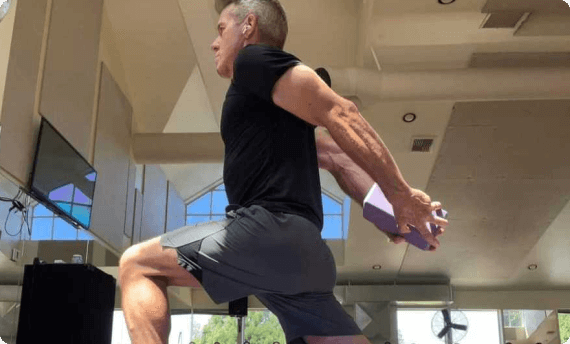
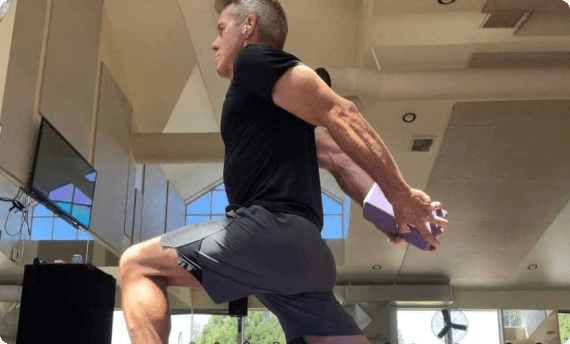
Carl Daikeler: And yeah, I’m short today, but for 24 hours I’ve appreciated that I showed up for that. And, you know, I mean, this this is our studio that I’m sitting in where we shoot all our workouts, and normally I don’t like to work out in the afternoon. But this was an early start. So there’s a room here, in fact, that might even just work out where we shoot the workouts.
Carl Daikeler: Myself, I’ll put the little iPad up and I’ll do one of our workouts, and that’s going to support my my overall health, esteem. And, it’s those little things, you stack those up and eventually, you’ve got something really to be proud of. And that’s, that’s, I think the pursuit.
Dean Pohlman: Yeah. Well, Carl, I want to say thank you for joining me today. And, Yeah, it’s great. A lot of good things shared here. So, yeah, thanks for thanks for your time.
Carl Daikeler: Awesome. Well, if we if you want to reschedule something like, I’d love to come back, maybe this summer, June, July. And, we’ll have a lot more to talk about.
Dean Pohlman: Yeah, let’s do it. All right, guys, thanks for tuning in. I hope this inspires you to be a better man. I’ll see you on the next episode. All right, guys, hopefully you enjoyed that interview. If you want to learn more about body, its body, check that out. They do an on demand, streaming platform. Kind of like, man for yoga, except, you know, way more popular and, way more programs than what I do.
Dean Pohlman: But, yeah, check them out. If you’re looking for follow along workouts, you can check out Carl. He’s on Instagram at Carl Dykstra. D I k e l e r. He’s also on LinkedIn. And you can check out those links in the description of the show notes here. Guys, I hope you enjoyed the shorter podcast episode.
Dean Pohlman: We are doing more of these. This is the first of many to come for season six. Got a lot of great guest lined up, a lot of repeat guests, and also some new faces. So hope you guys are enjoying the podcast. I hope you enjoyed the last season where we did the member interviews. From what I hear, those were very inspirational, practical, and helpful, but I’d love to hear what you think.
Dean Pohlman: You can email us at help at Mandalay yoga.com. I’m on all the social medias, Instagram, Facebook, even TikTok and on YouTube as well. And if you guys are enjoying this podcast, I encourage you to leave a review wherever you’re listening, whether that’s on Apple Podcast, on Spotify or somewhere else. So guys, I hope this is inspiring you to be a better man and I will see you on the next episode.
[END]